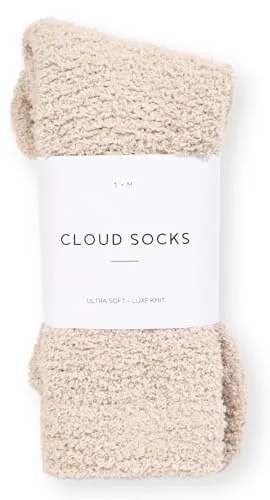
 #1 Women’s Slipper Socks
UnboxMe Sweet Dreams Cloud Socks — Ultra-Soft Fuzzy Sleep Socks
- Machine washable, no shedding — the same sock, every month.
An idea from the UnboxMe account · real Brand Analytics data
In August she types fuzzy socks. In December she types stocking stuffers. In February she types pilates grip socks. Amazon shows her the same listing every time — written for one of those moments and wrong for the other two. This page shows what happens when the listing reads the season back.
Interactive · one product, six moments
The product photo, the price and the reviews stay put. Everything with a dotted outline is a context slot BoostSR can test: the frame line, the first bullet, the secondary image, the badge. The search bar shows what shoppers actually type in that month.
#1 Women’s Slipper Socks
Why this exists
Below is the actual weekly search volume for the six phrases in the demo, from Amazon Brand Analytics for the Unboxme Gifts account. The line for “christmas socks” goes from a few hundred to almost 28,000 searches a week and back. The Cloud Socks listing said “ultra-soft sleep socks” through all of it — and finished December outside the top three on both gift phrases.
That is not a copywriting failure. It is a scheduling failure. Nobody has a calendar for which words should be on the page in which week, and nobody has a safe way to change them without risking the ranking that pays the bills.
The rules that make it safe
No props, no callouts, no Santa hat. Season lives in the secondary images, the frame line and the first bullet. Amazon’s main-image rules are the boundary, not a suggestion.
“Comes in a cotton gift bag” is allowed because it does. “Non-slip” is allowed only on the grip ASIN (B0D99Y1VF2). The system can restage a scene; it cannot invent a feature.
Each season swap runs as a controlled test with a holdout, on one ASIN, for a fixed window. If conversion does not lift, it reverts. The Cloud Socks listing converts at — nothing ships that risks that.
BoostSR proposes the swap, the calendar and the copy. Moshe (or the brand owner) approves. Then it goes live, gets measured, and the outcome is remembered for next year.
What it is worth
Searches × click share × conversion × price. The defaults are UnboxMe’s: 13.9% catalog conversion over the last 88 days and a $9.94 average selling price. Click share defaults to 5% — about half what UnboxMe already holds on “fuzzy socks”. This is an illustration of the size of the window, not a revenue promise.
How BoostSR runs it
Already running on the UnboxMe account
Built inside the UnboxMe account first (Inc 5000, ~$15M/yr on a two-person team). Now offered to other Amazon brands.